

Diamond Painting Instructions for Beginners
This guide takes you through the basics of diamond painting step by step: what comes in the kit, how to read the symbols, how to place the drills and which size suits a first project. You learn best by doing, and over time everyone finds their own way of working.
Diamond painting in brief:
- Check that the kit contains the canvas, all the drill bags and the tools.
- Peel back the protective film from a small area only.
- Pour drills of one colour into the sorting tray.
- Press the tip of the drill pen into the wax.
- Pick up a drill with the pen and place it on the matching symbol on the canvas.
- Cover the unfinished area with the film when you stop.
How does diamond painting work?
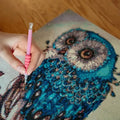
Diamond painting, also called diamond art, is a craft hobby in which a picture is built from tiny acrylic drills. You stick the drills one by one onto an adhesive canvas. The canvas is printed with small symbols, and each symbol stands for one drill colour. Once every symbol is covered, the finished piece looks like a sparkling mosaic.
You don't need any drawing or painting skills. All you have to do is find the right symbol and the right colour. The work mainly takes patience and good light. You can frame the finished piece as a picture or give it as a gift.
Why is diamond painting so popular?
There are several reasons:
- Easy to start – the kit includes everything you need, so you don't have to know or own anything beforehand.
- A calm activity – many people find placing the drills relaxing, and it may help you switch off from everyday life.
- A striking result – the finished piece works as a picture on the wall just as it is.
- Community – people actively share tips and finished pieces in Facebook groups and forums.
- Fits into short breaks – you can make good progress in a quarter of an hour over an evening cup of tea.
What comes in a diamond painting kit?
A diamond painting kit usually includes everything you need to get started, whoever the manufacturer is. So you can forget about extra accessories at first. Once you get into the hobby, it's easy to decide which extras you'd like and how much you want to spend on them. Diamond painting is a fairly affordable hobby, but like any hobby, it can end up costing more than you'd care to admit 😅
Our diamond painting kits include:
- An adhesive canvas printed with symbols. The surface is sticky like a sticker and covered with a protective film.
- A symbol chart showing which colour code matches each symbol. The chart is usually printed along the edge of the canvas.
- Acrylic drills in bags labelled with colour codes. There are usually about 20–30% extra drills.
- Tools: a drill pen, wax and a sorting tray.

How do you get started?
Find a well-lit table that's big enough to spread everything out comfortably. Working in a cramped space is no fun.
Lay out the contents of the kit on the table and check that you have the right picture, the right drills and everything else that should be in the package. Compare the symbol chart with the drill bags and make sure every colour is there.
How to read the symbols
The picture below shows a close-up of a diamond painting canvas. Finding the right drill colour is easy: look up the symbol on the chart and read the colour code next to it. The drill bags are labelled with the same colour codes.

Removing the protective film
The canvas is covered with either a clear or a paper protective film. Don't remove it all at once, because exposed adhesive dries out and collects dust. Only uncover the area you'll finish in one go.
You can fold the edge of the film back or cut a strip off it. If you cut it, lift the film off the canvas first so the blade doesn't cut into the canvas. When you stop, cover the unfinished area with the film. If the original film tears, see our tips on using diamond painting release paper.
Placing the drills
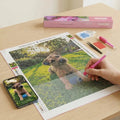
Pour some drills of one colour into the sorting tray that comes with the kit. Shake the tray gently so the drills turn flat side down. Take the drill pen and the wax. Press the tip of the pen into the wax until the tip is filled with wax. The drills will now stick to the tip: pick up a drill and place it on the matching symbol on the canvas.
Once you've got the hang of it, you can try a wide tip that picks up several square drills at once. Watch our short video on picking up drills. You can also read more about using diamond painting wax.
Round or square drills – which should you choose?
This is one of the most common first questions. In short:
- Round drills are more beginner-friendly. You don't need to line them up, and small misalignments are less noticeable. They also have a lovely sparkle.
- Square drills cover the canvas more tightly with no gaps, and the finished piece looks like a smoother mosaic. On the other hand, placing them takes a little more precision.
Our tip: start with round drills and try square ones once you've got the basic routine down. Many experienced diamond painters prefer square drills for that satisfying "snap" as the drills click tightly into place side by side. Both work perfectly well. For a closer comparison, see the differences between round and square drills.
What are the differences between diamond paintings from different manufacturers?
Diamond paintings from all manufacturers work the same way, but there are some differences. The main ones are in the protective film and the drill bags.
Some manufacturers machine-pack the drills into small bags of about one gram. Others scoop the right amount by hand into one resealable bag per colour. Many people prefer the resealable bags.
The other big difference is the protective film. Some canvases have a clear film over the adhesive, others a paper one.
What's the difference between paper and plastic protective film?
A clear film often means that glue has been spread onto the canvas. A paper film often covers double-sided adhesive tape that has been applied to the canvas. Double-sided tape is usually used when diamond paintings are made one at a time. Glue is used in mass production, when many copies of the same picture are made at once. In a good-quality product, it hardly matters which method has been used.

What size diamond painting should you get?
A good first size for a beginner is usually 30x40 cm or 40x50 cm. A smaller piece is finished sooner and teaches you the technique without too big a project. If you're making a diamond painting from your own photo, don't choose too small a size: faces, pet fur and small details need more space.
A quick rule of thumb: 30x40 cm is an easy start for a ready-made design, 40x50 cm is a safe all-round size for adults, and for an important gift made from your own photo, consider 50x70 cm or larger. For a more detailed estimate of size and workload, see our diamond painting size guide and calculator.
Common problems and how to fix them
Almost every diamond painter runs into these at some point. Don't worry – most of them are easy to fix.
The drill won't stick to the pen
Add more wax to the tip of the pen or swap in fresh wax. If the tip is dirty, clean it gently. It's worth keeping some spare wax within reach.
Drills are lifting off the surface
Gently press the finished area flat with a diamond painting roller, a rolling pin or the back of a book. If the problem continues, the adhesive may have dried out – see the next point.
The adhesive dried out while you were working
This easily happens if you've peeled the film back from too large an area. Cover the unfinished areas with the film and continue in smaller sections. If the drills no longer stick, apply a thin coat of diamond painting sealer to the dry area – it also works as glue. If the canvas is already dry when you open the package, get in touch with us.
Static drills (they jump around and cling to each other)
Static builds up in dry indoor air, especially in winter. Pour only a few drills into the tray at a time. If needed, wipe the tray lightly with a damp cloth and let it dry, or try an anti-static tray.
An LED light pad is a great extra for long sessions. It makes the symbols easier to read, especially on dark canvases and in dim light.
What to do with a finished diamond painting
You can finish your work with sealer. Sealer fixes the drills permanently, so they stay in place even if the adhesive weakens over the years. Sealing isn't compulsory, but it's worth doing for large and important pieces, especially if the work will hang on the wall without glass. You'll find step-by-step instructions in our guide to sealing a diamond painting.
After that, you can frame your work, give it as a gift, use it as decoration or collect your finished pieces in a folder. For more ideas, read what to do with finished diamond paintings.
Related guide: If you're wondering which tools are essential and which can wait, read our guide to diamond painting tools and accessories for beginners.
Frequently asked questions
Is diamond painting difficult for beginners?
Usually not. The technique is simple, and the kit includes everything you need. A small, clear first project, such as 30x40 cm or 40x50 cm, makes it easier to get started.
What accessories are worth buying besides the kit?
The kit is enough to get you started, but many people soon find a light pad, storage boxes and spare wax useful. They make long sessions more comfortable.
What size is best for a first diamond painting?
30x40 cm is an easy first size for a ready-made design. If you're using your own photo, 40x50 cm or larger may give a clearer result.
Finally
A lot of this will be obvious to experienced diamond painters, but hopefully many beginners will find answers to their questions here. I'll keep updating this guide as I think of things to add.
Happy diamond painting, everyone!
The illustration in this article is AI-generated.
Start your own project
A diamond painting kit comes with the canvas, the diamonds and the tools in one package.