
How to Seal a Diamond Painting – Complete Guide
A finished diamond painting does not automatically need sealing. Start with how you want to display or store it, then check the instructions for your kit and chosen sealer. If you decide to seal, choose a product intended for diamond painting and test it on a separate sample before treating the finished piece.
This guide helps you decide whether to seal and prepare the work. The product packaging remains your reference for application, drying times and safety precautions.
Should you seal your diamond painting?
First identify the problem you want to solve. Are you treating exposed sticky areas between drills, changing the surface finish or dealing with loose drills? One product or method may not suit all three purposes.
- The drills are secure and you like the finish: consider displaying the piece without a coating. Choosing a frame or glass does not, by itself, mean you need to seal it.
- Drills are coming loose: check their position and attachment using the kit instructions first. Do not assume that coating the entire surface will fix an adhesion problem.
- You have AB or other special-effect drills: check compatibility before applying anything. Include the same types of drills in your test sample.
There is no need to rush into sealing simply because the last drill is in place. If you cannot identify a reason to add a coating, leave the decision until you have planned how to display the work.
Choosing a sealer: check the actual product
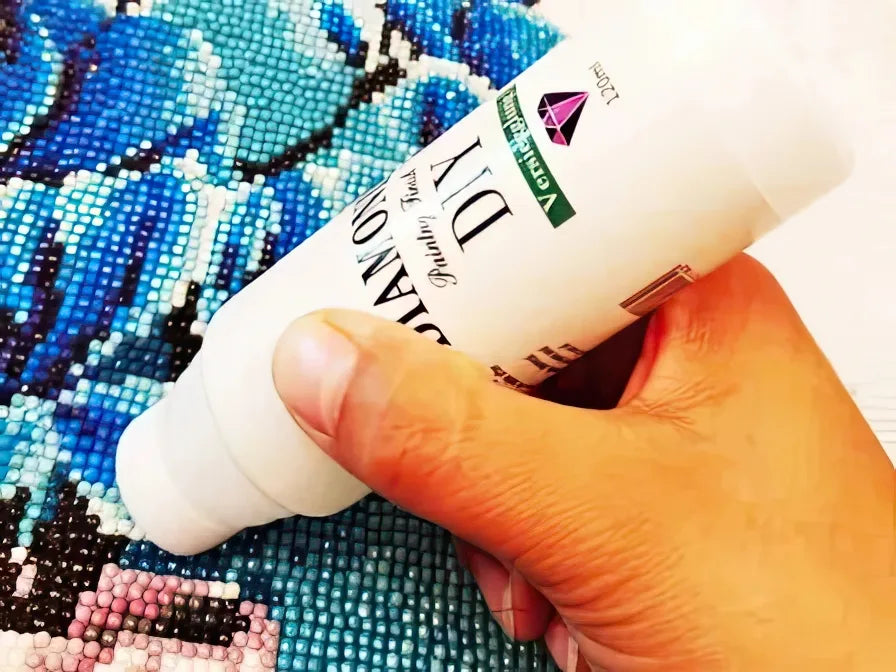
Our 120 ml diamond painting sealer is applied to the surface; it is not an aerosol spray. See the product page for pack details and current availability, and follow the instructions supplied with the bottle.
A generic craft varnish is not automatically suitable just because it promises a glossy finish. Check suitability for your materials before use. A description such as “odourless” is not a substitute for reading the application instructions and warnings.
Prepare the painting before applying sealer
- Check the surface in good light. Add missing drills and adjust any that are out of position before applying a coating.
- Check that the drills are seated. Follow your kit's pressing instructions. Rolling is not a compulsory step for every project, and advice for standard drills should not be assumed to suit special shapes or finishes.
- Carefully remove visible loose debris. Do not introduce a cleaning agent or solvent without instructions confirming it is suitable for the materials.
- Prepare a flat, protected work area. Make room to leave the painting undisturbed. Read the product's ventilation and protective-equipment instructions before starting.
Test on a separate sample
Where possible, use a small separate sample with the same backing and drills as your painting. A spare drill alone will not show how the sealer interacts with the canvas adhesive. If you have no suitable sample, ask the seller about compatibility or leave the work uncoated for now. A corner of the finished piece is not a risk-free test area.
Let the sample dry as directed, then compare it with an untreated area under the same lighting. Look at the sparkle, clarity and any coating left between the drills. If you do not like the result, do not apply it to the full painting.
Applying the sealer and allowing it to dry
- Read the label before opening the bottle. Use the applicator and method specified for that product.
- Spread the recommended amount evenly. Do not pour excess sealer onto the canvas or add a heavy layer just in case.
- Leave the painting flat while it dries. Avoid touching the surface or framing the piece until the product instructions say it is ready for handling.
- Only add another coat if needed and permitted by the instructions. Check the required interval between coats as well.
There is no single drying time for every sealer. Use the instructions for your bottle, rather than a general 24-hour rule. Surface drying and full curing may be different stages. If essential instructions are missing, ask the seller before treating the painting.
What if the finish looks wrong?
Do not try to fix bubbles, cloudiness or another unexpected result by adding more sealer, heating the painting or applying a solvent without product-specific guidance. Check the instructions first. If the problem appears on your sample, leave the finished painting untreated.
No general guide can promise an unchanged sparkle or an easily removable coating for every combination of materials. Checking compatibility and testing first are more useful than rushing the finishing step.
For help with the rest of your project, see our diamond painting tips and troubleshooting guide. You can also browse diamond painting tools and accessories for your next project.
