
Diamond painting storage ideas: practical systems for drills, tools and finished canvases
Diamond painting is relaxing until your setup starts fighting you. A missing wax pad, mixed drill colours, and a half-covered canvas on the table can turn a calm hobby session into a messy search operation.
The good news: you do not need a dedicated craft room to stay organised. You only need a clear storage structure that matches how you actually work.

In this guide, you will get practical diamond painting storage ideas for: 1. drill storage during active projects 2. tool storage for smooth daily sessions 3. finished canvas storage before framing or display
You will also get a quick starter system you can set up in one afternoon.
Why storage matters more than most people expect
Many crafters treat storage as an “optional extra” In reality, storage quality affects your results and your enjoyment.
A good system may help you: - reduce colour mix-ups - spend less time searching and more time placing drills - keep materials clean and dry - resume projects quickly after a break - protect finished work before framing
If you complete several kits per year, these gains stack up quickly.
Drill storage ideas that work in real life
1) Labelled container case (best all-round option)
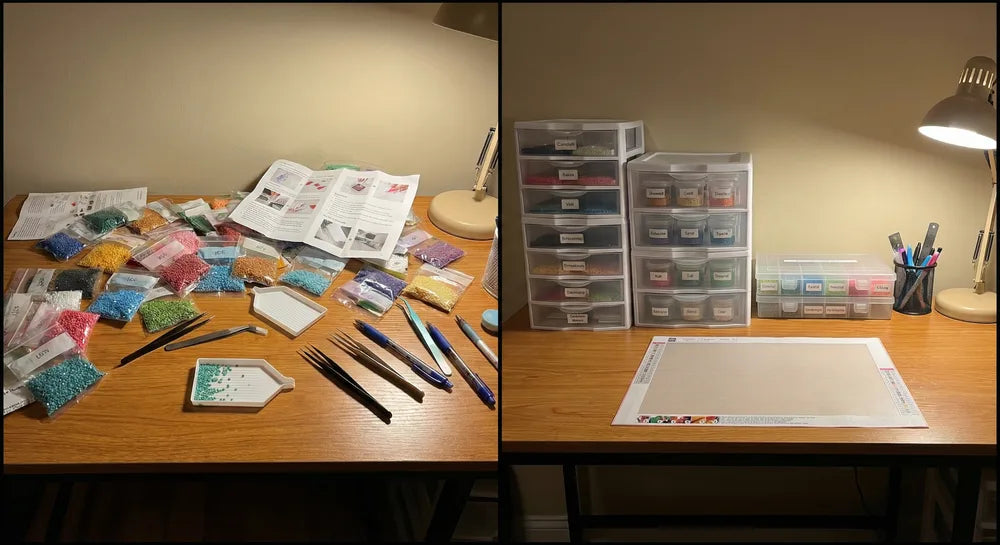
For most hobbyists, a structured storage case with individual pots is the easiest long-term solution. Label each pot by DMC code and symbol.
Useful links: - Diamond painting accessories collection - Storage case for drills - DMC sticker sheets
Tip: if you run multiple projects, include project initials on each label to avoid accidental mixing.
2) Small drill jars in a drawer organiser
If you work on larger canvases, individual jars can be efficient because you can open only the colours you need. This method is slightly slower to label but very stable in use.
Helpful options: - Drill bottle pack - Stackable organiser
3) Zip bags + binder (budget starter method)
A low-cost method for beginners: labelled zip bags grouped by colour family or symbol order in a binder or box.
Pros: - inexpensive - flexible for testing your workflow
Cons: - slower for daily access than rigid pots - easier to misplace if your setup moves often
4) Active-colour mini tray system
For short evening sessions, keep only 5-10 active colours in a compact tray setup. Store the rest sealed. This reduces clutter and accidental spills.
Tool storage: organise by frequency, not by type
One common mistake is storing all tools in one large mixed box. You save space, but lose speed.
A better method is frequency-based zoning.
Zone A: Every session tools
- pen
- wax
- one or two trays
- tweezers
Keep these in immediate reach: - Diamond painting tool set - Diamond painting wax - Pen with metal tips
Zone B: Weekly adjustment tools
- spare pen tips
- straightening roller
- correction pen
- extra trays
Keep in a secondary box close to your workspace.
Zone C: Backup stock
- spare wax packs
- spare labels
- extra containers
- replacement accessories
Store this separately so your daily area stays clean and fast to use.
Storage ideas for finished diamond paintings
Finished canvases need different handling than active projects. Poor storage can lead to lifted drills, bent corners, dust build-up, or sticky-surface damage.
Practical rules
-
Avoid folding
Never fold a finished canvas. It can stress the adhesive structure and cause drill lift. -
Keep surfaces protected
Use diamond painting release paper or another clean separator intended for the adhesive surface. -
Store flat when possible
Flat storage is usually safest before framing. -
Use portfolio folders for collections
If you finish several canvases, a dedicated folder keeps them separated and easy to browse.
When you are ready to display it, see our diamond painting framing guide.

Small-space diamond painting storage ideas
You can build a solid system even in a one-table setup.
1) Project box method
One box per active project: - labelled drills - current tools - project notes - protective sheet
When you start, you take one box out. When you stop, everything returns to one place.
2) Vertical stacking
Use height, not floor area: - stackable boxes - slim drawers - shelf organisers
3) 10-minute reset routine
At the end of each session: - return drills to labelled pots - close wax packs - wipe tray surface - cover canvas - place tools back in Zone A container
This short routine prevents much of the friction at the start of the next session.
Common storage mistakes (and easy fixes)
Mistake 1: Labels only on paper key
Fix: label each container directly at setup stage.
Mistake 2: Too many open colours at once
Fix: keep only current section colours open.
Mistake 3: No project separation
Fix: assign each project a unique code or box.
Mistake 4: Tool pile instead of zones
Fix: split tools into daily, weekly, and backup groups.
Mistake 5: Finished work left exposed
Fix: protect and store flat until framing or display.
A simple starter setup you can copy
If you want a low-stress setup without overthinking, start here:
- one container case for drills
- DMC labels/stickers
- one comfortable pen + spare wax
- 1-2 trays
- one folder for finished canvases
Useful collection links: - Diamond painting collection - Diamond painting accessories - diamond painting tips and tricks guide
Once this base is working, you can expand gradually instead of buying random organisers that do not fit your process.
How to choose the right storage style for you
Use these three questions:
How many active kits do you run?
- 1 kit: simple labelled case is enough
- 2 kits: add project-level separation
- 4+ kits: use active/archive storage tiers
Do you work in short or long sessions?
- short sessions: keep the setup “one-box ready”
- long sessions: a larger bench setup works, but the reset routine is still useful
Is your workspace fixed or mobile?
- fixed: tray station + nearby backup drawer
- mobile: compact carry case and mini active-colour pack
Session workflow example: a tidy 60-minute routine
If you want your setup to stay usable long-term, daily rhythm matters more than buying more containers.
Before you start (3–5 minutes)
- select one canvas section
- prepare only the colours needed for that section
- check wax, pen tip, and tray are ready
- place one small “spill cup” nearby for stray drills
During the session
- keep one active tray visible
- close colour pots immediately after each switch
- avoid stacking open containers on top of each other
End-of-session reset (5–10 minutes)
- return drills to labelled pots
- clean tray surface lightly
- close wax and store pen in Zone A
- cover canvas
- place everything back in its project box
This tiny reset is often the difference between “I can start instantly tomorrow” and “I need 20 minutes just to find things”.
When should you upgrade your storage system?
A lot of crafters wonder whether they need a bigger organiser. A better question is: does your current system create friction?
Upgrade when you notice: - repeated colour mix-ups - frequent time loss searching for tools - two or more active projects causing confusion - exposed finished canvases waiting too long for framing - clutter that makes short sessions impractical
In most cases, you do not need a full rebuild. Fix the bottleneck first: - clearer labels - project-specific containers - separate daily tools from backup stock - add one folder for finished work
Storage and quality control
Storage also supports final quality. Dust, moisture, and accidental contact can affect both drill adhesion and overall finish.
Three practical quality checks:
-
Clean start surface
A quick wipe before each session reduces debris under your hands and tools. -
Closed containers by default
Open containers invite dust and accidental spills. -
Protected waiting state for finished canvases
If framing is delayed, keep finished work flat and covered.
These habits do not make the hobby rigid. They simply make outcomes more consistent.
Final takeaway
The best diamond painting storage ideas are not the most complicated ones. They are the ones you will actually use every week.
Start with one upgrade today: direct labelling, a project box, or a proper daily tool zone. Small structural changes can make the hobby feel smoother immediately.
If you want to improve your setup with dedicated products, start from: - Diamond painting accessories - Diamond painting kits
If you are setting up your first workspace, this guide to basic diamond painting supplies helps you decide what you need now and what can wait.
FAQ
1) What is the best way to store diamond painting drills?
For most people, labelled individual pots in a structured case are the most reliable option for speed and accuracy.
2) Should I store drills in bags or hard containers?
Bags are fine for budget setups, but containers are typically faster and safer for regular use.
3) How do I store finished diamond paintings before framing?
Store finished canvases flat with protective separators; avoid folding and dust exposure.
4) How can I avoid mixing colours across multiple projects?
Use project-specific labels and separate project boxes.
5) Which storage accessory should I buy first?
A labelled drill container system is usually the first upgrade that gives the biggest practical benefit.
Start your own project
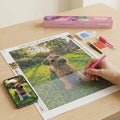
A diamond painting kit comes with the canvas, the diamonds and the tools in one package.