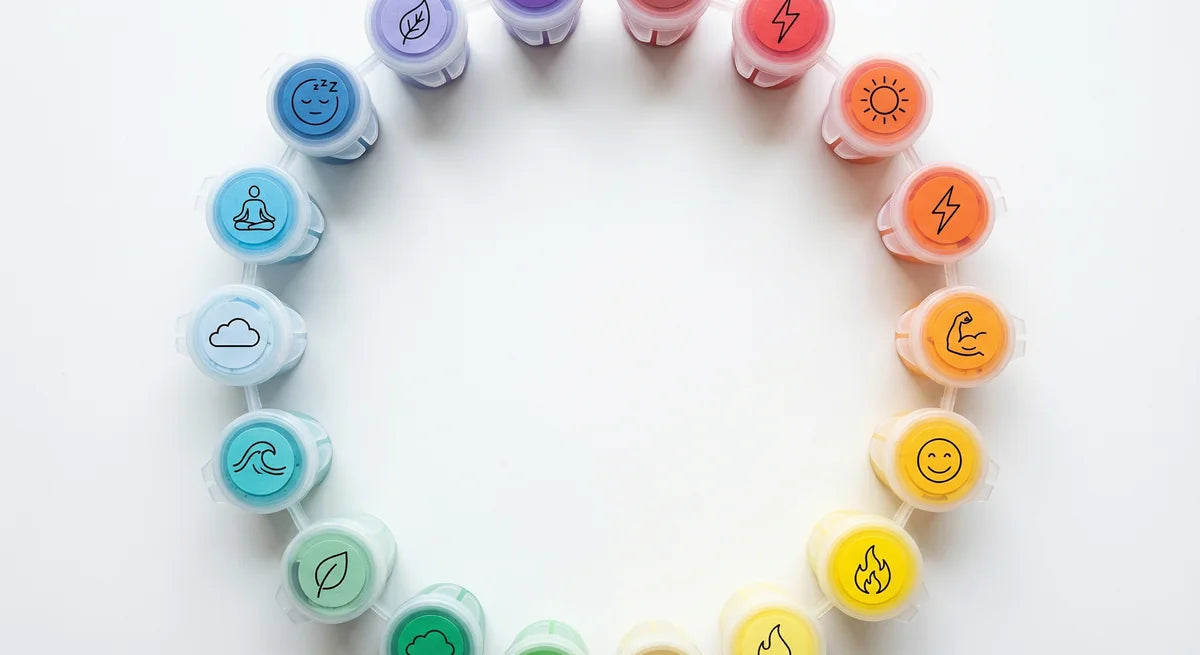
Colour Therapy Guide - How Colours Affect Mood & Wellbeing
Colour therapy, also known as chromotherapy, is an age-old practice built on the idea that colours affect our mood, emotions and wellbeing. Scientific evidence for its medical effectiveness is limited, but some studies suggest that colours can influence both body and mind. You can put this to use in everyday life – including in creative hobbies such as paint by numbers and other colour-based crafts.
What science says about colour therapy
How does the brain process colour?
When our eyes register a colour, the signal travels to the visual cortex and on to many other areas of the brain. Seeing colour is also linked to memories and emotions. That is why many people react to certain shades quickly and emotionally, although reactions vary from person to person.
What studies suggest
In research, the effects of colour show up mainly as associations and perceived mood. Many people experience blue and green as calm and red and orange as energising. The effects are usually small, though, and culture, personal memories and lighting all play a big part.
It is important to note that colour therapy is not a scientifically proven medical treatment.
How individual colours affect mood
Blue — calming and clarifying
Blue is one of the most studied colours in colour psychology. Some studies suggest it may:
- Calm you down and slow the pace
- Make it easier to relax in the evening
- Support concentration and contemplation
Blue is a great choice for landscape paint by numbers kits that aim for a calm atmosphere.
Green — balancing and renewing
Green is associated with nature and renewal. Many people find that it:
- Feels balanced and restful
- Rests the eyes during detailed work
- Supports concentration without overstimulation
Yellow — energising and cheerful
Yellow is the colour of the sun. Many people find that it:
- Perks you up and brings energy
- Lifts the mood on a grey day
- Sparks creativity
- Feels open and sociable
Pale shades of yellow often feel softer than bright lemon yellow.
Orange — warming and lively
Orange combines the energy of red with the joy of yellow. It is seen as:
- Warm and homely
- Appetising – which is why you often see it in restaurants
- Sociable, creating a sense of togetherness

Red — bold and energising
Red is seen as the most stimulating colour. In colour therapy, it is believed that red:
- May raise energy levels and alertness
- May feel warming
- May boost confidence and courage
- May feel restless if there is a lot of it
Violet and purple — spiritual and meditative
Deep violet shades have traditionally been linked to:
- Spirituality and self-knowledge
- Meditation and quiet reflection
- Creativity and imagination
Colour therapy in practice — paint by numbers and colouring
Paint by numbers as a colour therapy tool
Paint by numbers kits are a simple way to put the ideas of colour therapy into practice. When you focus on mixing colours and moving the brush, many people feel the same calm as in colour therapy.
What painting can give you:
- A meditative state: Detailed work can calm the mind
- Flow: When you are absorbed in the work, everyday worries fade for a while
- Playing with colour: Mixing shades is fun and may lift your mood
- Pride in the finished piece: A finished painting on the wall gives you a sense of achievement
Choosing colours to suit your mood
When you want to wind down:
Choose a piece with plenty of blue, green or violet. Seascapes and lighthouse paint by numbers kits suit a calm evening.
When you need energy:
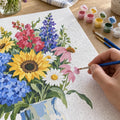
Warm colours such as orange, yellow and soft reds may give you a lift. Try sunflower paint by numbers kits or other flower paint by numbers designs.
When you want to find balance:
Green is the colour of balance. A nature landscape or a piece in shades of green may help you focus. If it is your first time painting, choose one of our easy paint by numbers kits.
Diamond painting and colour therapy
In diamond painting, the joy of colour meets a sparkling, rewarding result. The tiny acrylic drills reflect light and create a calm, shimmering effect.
For calm evenings, try mandala diamond painting designs; for a lift, flower diamond painting designs.
Why do so many people find diamond painting calming?
- The sparkle is a joy: The eye enjoys shiny surfaces
- Detailed work needs deep focus: Many people compare it to meditation
- A steady rhythm: The repetitive movement can be calming
- Instant feedback: Every drill you place brings a little satisfaction
Personal colour therapy — paint by numbers from your own photo
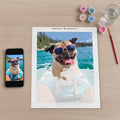
Custom paint by numbers from your own photo makes the painting session personal. When you paint an important memory or someone you love, the emotional connection makes painting even more meaningful.
How to choose the right photo:
For calm:
- Nature and landscape photos
- A peaceful photo of a loved one or a pet
- Memories that make you feel safe
For energy:
- Photos of joyful moments
- Sport or exercise photos
- Bright, light-filled photos

Colour therapy in different situations
Busy working life
After a hectic day, winding down with colours may help you switch off from work:
- Blue: feels calming
- Green: feels balancing
- Violet: suits quiet reflection
Tip: set aside half an hour in the evening for paint by numbers or colouring.
Low days
On a grey day, bright and warm colours may cheer you up:
- Yellow: brings brightness
- Orange: brings warmth and energy
- Light green: feels fresh and hopeful
If low mood lasts for a long time, talk to your doctor or a health professional. Colours and painting are not a substitute for treatment.
A calm evening
A quiet painting session may help you wind down before bed – especially if it replaces scrolling on a screen. Soft shades suit the evening:
- Dark blue: calm and deep
- Lavender: soft and restful
- Soft green: the calm of nature

Combining colour therapy with other wellbeing practices
Meditation and colour
You can also use colours as an aid to meditation:
- Colour visualisation: Imagine a calming colour flowing through your body
- Colour breathing: Breathe in calming blue, breathe out stress
- Colour scan: Picture the colours of different parts of your body
Your surroundings
The colours in your home affect the atmosphere:
- Bedroom: Many people find blue and violet shades restful
- Study: Green supports concentration, yellow creativity
- Living room: Warm earthy tones create a sense of togetherness
A colour therapy kit for home
Basic supplies for beginners
- A wide range of colours: A comprehensive paint by numbers kit in many shades
- Good lighting: Daylight or a quality LED lamp
- A quiet space: Somewhere you can focus without interruptions
- Diamond painting accessories: Magnifiers and a light pad for detailed work
For more experienced hobbyists
- Colour theory: Once you understand the colour wheel, you can choose shades more precisely
- A mood journal: Note how different colours make you feel
- Variety: Different techniques for different needs
Colour therapy alone and in a group
On your own
On your own, colour therapy gives you:
- Time for reflection: Listen to your feelings as you work with colour
- Your own pace: Go at your own rhythm
- Full focus: No social pressure or distractions
In a group
With others, colour therapy offers:
- The joy of sharing: Swapping experiences and peer support
- Motivation: Seeing others progress inspires your own work
- Social contact: New friendships and hobby buddies
Colour therapy and parents' wellbeing
A painting session can help parents:
- Switch off from everyday life: A moment to yourself amid busy parenting
- Set an example: Children see calm problem-solving
- Take a breather: When a parent gets a moment to themselves, the whole family benefits
Frequently asked questions
Does colour therapy really work, or is it just in the mind?
Colours affect the atmosphere – anyone who has repainted a room knows that. However, there is no strong scientific evidence that colour therapy works as a medical treatment. Think of it as a way to support your wellbeing, not as a treatment.
Can I combine colour therapy with medication?
Colour therapy is not a treatment, and it does not replace treatment or medication prescribed by your doctor. Painting works well as a hobby alongside treatment. If you are unsure, ask your doctor.
How quickly will I notice the effects?
Many people notice they feel calmer during their very first painting session. When you paint regularly, calm moments become part of everyday life.
Is colour therapy for everyone, or is it "just for women"?
It is for everyone. Colours and painting don't care about gender, age or background. How we experience colour is still personal: the same shade can calm one person and irritate another.
What if a colour feels unpleasant?
Skip it. If a colour feels uncomfortable, choose a painting with less of it. Colours carry personal associations, and you don't need to explain them.
Working with colour is an easy and enjoyable way to bring calm moments into everyday life. With paint by numbers and diamond painting, you also get a finished piece for your wall. Start small and choose colours that feel good right now.
The illustrations in this article are AI-generated.
Start your own project
A paint by numbers kit comes with the canvas, the acrylic paints and the brushes in one package.