Scratch Art for Adults - Relaxing Creative Hobby Guide
Scratch art has evolved far beyond childhood memories of scraping away black surfaces to reveal rainbow colours underneath. Today, this meditative creative practice has found its place amongst the most effective stress-relief hobbies for adults seeking mindful relaxation without the complexity of traditional art forms.
Unlike painting or drawing, which can intimidate beginners with blank canvases and endless possibilities, scratch art provides structure whilst maintaining creative freedom. The pre-prepared surfaces and guided designs offer a perfect balance between artistic expression and accessible entry points for those who've never considered themselves "artistic."
What Is Adult Scratch Art?
Adult scratch art involves using specialised tools to carefully remove the top layer of specially prepared surfaces, revealing vibrant colours or metallic foils beneath. Modern scratch art differs significantly from children's versions, featuring intricate designs, sophisticated colour palettes, and varying difficulty levels that can engage adults for hours.
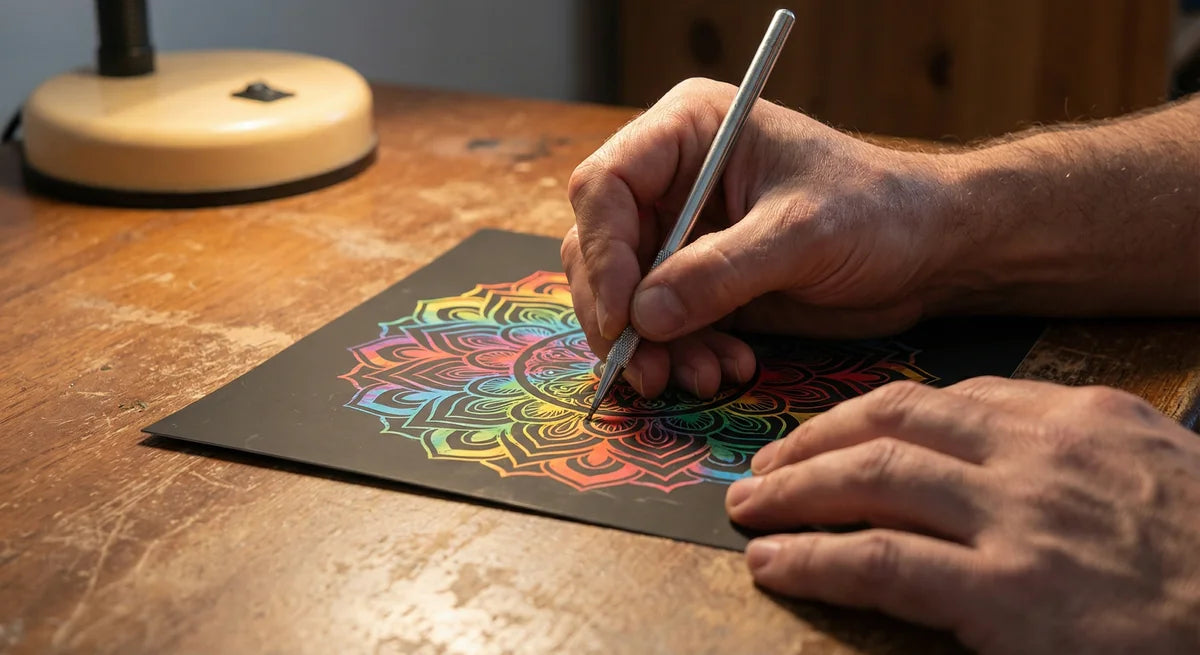
The process is remarkably straightforward: you receive a sheet covered in a removable black coating, beneath which lies a colourful or metallic surface. Using the provided stylus or scratching tool, you follow printed guidelines or create your own patterns, gradually revealing the hidden artwork underneath.

Types of Adult Scratch Art
Traditional Rainbow Scratch Paper: Features vibrant rainbow colours beneath a black coating, perfect for bold, cheerful designs.
Metallic Foil Scratch Art: Reveals gold, silver, or copper metallic surfaces, creating elegant, sophisticated finished pieces suitable for framing.
Gradient Scratch Boards: Show subtle colour transitions, ideal for landscapes or more nuanced artistic expressions.
Holographic Scratch Art: Creates rainbow prismatic effects, adding depth and movement to completed designs.
The variety available in modern scratch art collections ensures that every preference and skill level can find suitable projects, from beginner-friendly geometric patterns to complex landscape scenes.
The Science Behind Scratch Art's Therapeutic Benefits
Research into art therapy consistently demonstrates that repetitive, focused creative activities trigger measurable physiological changes in the body. When engaging in scratch art, adults experience what psychologists term "flow state" - a mental condition characterised by complete immersion in the activity at hand.
Cortisol Reduction
Research shows that creative activities, including scratch art, can lead to statistically significant reductions in cortisol levels for most participants. Cortisol, the body's primary stress hormone, becomes elevated during periods of anxiety, work pressure, or general life stress. The focused nature of scratch art naturally redirects attention away from stressful thoughts, allowing cortisol levels to normalise.
Dopamine Release
The progressive revelation of hidden imagery in scratch art creates a series of small accomplishments throughout the creative process. Each section completed triggers a dopamine release - the brain's reward chemical - creating positive reinforcement that encourages continued engagement and improves overall mood.

Mindfulness and Present-Moment Awareness
The precision required in scratch art naturally cultivates mindfulness. Unlike digital entertainment that often overstimulates, scratch art demands focused attention on small, deliberate movements. This attention to detail grounds practitioners in the present moment, reducing anxiety about future concerns or regrets about past events.
Essential Scratch Art Techniques for Beginners
Starting with proper technique ensures satisfying results and prevents frustration that might discourage continued practice. Most adult scratch art projects include basic instructions, but understanding fundamental approaches enhances both the experience and the outcome.
Tool Selection and Preparation
Professional scratch art tool sets typically include multiple stylus options. Fine-pointed tools create delicate lines and detailed work, whilst broader tools efficiently clear larger areas. Many sets also include burnishing tools for smoothing revealed surfaces and protective gloves to prevent hand fatigue during longer sessions.
Before beginning, ensure adequate lighting and a comfortable workspace. Scratch art generates small particles as you work, so having a soft brush or cloth nearby for cleaning helps maintain clear visibility of your progress.
Basic Scratching Motions
Light Pressure Technique: Start with minimal pressure to test how easily the coating removes. Heavy-handed scratching can damage the underlying surface or create uneven results.
Consistent Direction: For smooth backgrounds, maintain consistent scratching direction. Varying directions creates texture, which can be desirable for certain effects but should be intentional rather than accidental.
Graduated Pressure: Vary pressure within single strokes to create line weight variation, adding visual interest and artistic depth to your work.
Advanced Pattern Creation
Once comfortable with basic techniques, experiment with cross-hatching, stippling, and spiral patterns. These approaches create texture and visual complexity that transforms simple designs into sophisticated artwork.
Cross-hatching: Overlapping lines at different angles create shadow effects and depth.
Stippling: Small dots revealed through quick, light scratches create subtle texture and tonal variation.
Spiral Patterns: Circular motions create organic, flowing effects particularly effective for natural subjects like flowers or water.
Choosing the Right Scratch Art Projects
Success with scratch art depends largely on selecting appropriate projects that match your current skill level and interests. Beginning with overly complex designs can lead to frustration, whilst projects that are too simple may not provide sufficient engagement.
Beginner-Friendly Options
Start with geometric patterns, mandalas, or simple landscapes that include clear guidelines and relatively large areas to scratch. These designs allow you to focus on technique development without being overwhelmed by intricate details.
Nature themes work particularly well for beginners because they're forgiving of small imperfections. Trees, flowers, and clouds look natural with slight irregularities that might appear as mistakes in more structured subjects.
Intermediate Challenges
Once comfortable with basic techniques, progress to projects featuring architectural subjects, detailed animal portraits, or complex mandala designs. These require more precision and planning but offer greater satisfaction upon completion.
Cityscape designs combine both geometric and organic elements, providing variety within single projects. The mix of straight architectural lines and flowing natural elements helps develop versatility in technique.
Advanced Projects
Experienced scratch artists often enjoy portrait work, highly detailed mechanical subjects, or completely original compositions created without guidelines. These projects require significant time investment but can result in frame-worthy finished pieces.
Creating original designs on blank scratch board represents the ultimate expression of scratch art mastery, combining technical skill with personal artistic vision.
Setting Up Your Scratch Art Practice
Establishing a dedicated space for scratch art enhances both the quality of your work and the therapeutic benefits of the practice. Unlike painting or other art forms requiring extensive setup, scratch art needs minimal equipment whilst still benefiting from thoughtful preparation.
Workspace Organisation
Choose a location with excellent lighting, preferably near a window with natural light supplemented by a desk lamp. Scratch art details become difficult to see in inadequate lighting, leading to eye strain and suboptimal results.
A cutting mat or piece of cardboard underneath your scratch board protects work surfaces and provides slight cushioning that improves tool control. Keep a small brush nearby for removing scratch debris, maintaining clear visibility of your progress.
Time Management
Unlike projects requiring wet materials that demand completion within specific timeframes, scratch art accommodates flexible scheduling. Sessions can range from 15-minute stress-relief breaks to multi-hour immersive experiences, making it ideal for busy adults seeking creative outlets that fit around demanding schedules.
Many practitioners find that 45-60 minute sessions provide optimal balance between therapeutic benefit and practical time constraints. This duration allows sufficient immersion for stress relief whilst preventing hand fatigue that might diminish enjoyment.

The Social Aspects of Scratch Art
While inherently a solitary activity, scratch art offers numerous opportunities for social connection and shared experiences that enhance its therapeutic value and create additional motivation for continued practice.
Scratch Art Groups and Communities
Many communities now host scratch art meetups where enthusiasts share techniques, display completed works, and enjoy creative fellowship. These gatherings provide social interaction focused around shared interests rather than competitive elements that might create anxiety.
Online communities offer year-round connection with fellow scratch art practitioners worldwide. Sharing progress photos, technique tips, and encouragement creates supportive networks that extend the hobby's benefits beyond individual practice sessions.
Gift-Giving and Sharing
Completed scratch art pieces make meaningful handmade gifts that demonstrate time, thought, and personal effort. Unlike store-bought items, scratch art gifts carry emotional value derived from the creator's invested time and creative energy.
Many practitioners maintain gift collections, working on pieces throughout the year for holiday and birthday presentations. This forward-thinking approach reduces seasonal gift stress whilst providing ongoing creative motivation.
Teaching and Mentoring
Experienced scratch artists often find great satisfaction in introducing others to the hobby. The relatively simple setup and immediate gratification make scratch art ideal for teaching children, elderly relatives, or friends seeking new creative outlets.
Teaching scratch art reinforces personal technique understanding whilst providing social connection and the satisfaction of enabling others' creative development.
Therapeutic Applications and Mental Health Benefits
Mental health professionals increasingly recognise scratch art's therapeutic potential for addressing various psychological challenges. The combination of focused attention, creative expression, and progressive accomplishment creates ideal conditions for emotional regulation and stress management.
Anxiety Management
The repetitive nature of scratch art naturally regulates breathing patterns and heart rate, creating physiological calm that reduces anxiety symptoms. Unlike meditation or breathing exercises that some find challenging, scratch art provides external focus that prevents anxious mind-wandering whilst achieving similar physiological benefits.
The structured nature of guided scratch art projects provides reassurance for individuals who find open-ended creative activities overwhelming. Clear guidelines reduce decision anxiety whilst still allowing personal expression within defined parameters.
Depression and Mood Enhancement
The progressive revelation inherent in scratch art creates frequent small accomplishments that combat the helplessness often associated with depression. Each revealed section provides tangible evidence of progress and capability, building confidence and positive self-regard.
The colour revelation aspect particularly benefits individuals experiencing depression, as the emergence of vibrant hues from darkness metaphorically represents hope and renewal whilst providing literal visual pleasure.
Digital Detox Support
Scratch art offers engaging offline activity that satisfies the need for stimulation without screen dependency. The tactile nature and immediate feedback provide sensory experiences that digital entertainment cannot replicate, supporting efforts to reduce screen time without feelings of deprivation.
Advancing Your Scratch Art Skills
Like any creative pursuit, scratch art rewards continued practice with improved results and expanded possibilities. Understanding progression pathways helps maintain motivation and prevents the stagnation that can diminish long-term interest.
Technique Refinement
Regular practice naturally improves tool control, pressure regulation, and design planning abilities. Keep early works to document progress - the improvement over time provides motivation and validates the value of continued practice.
Experiment with different tool types and pressure variations to expand your technical vocabulary. Many advanced practitioners develop signature styles recognisable in their finished works, reflecting personal aesthetic preferences and technical strengths.
Creative Expansion
Once comfortable with provided designs, consider modifying them with personal touches or combining elements from multiple projects. This personalisation bridges the gap between following instructions and creating original work.
Graduate to blank scratch boards for complete creative freedom. Original composition requires more planning and design skills but offers unlimited creative expression possibilities.
Documentation and Portfolio Development
Photograph completed works to maintain permanent records of your creative development. Digital storage allows easy sharing with family and friends whilst preserving memories of completed projects long after physical pieces are gifted or displayed.
Consider maintaining a creative journal documenting techniques discovered, design ideas for future projects, and personal reflections on the therapeutic benefits experienced through regular practice.
Frequently Asked Questions
How long does it take to complete a typical scratch art project?
Completion time varies significantly based on design complexity and individual working pace. Simple designs might require 1-2 hours, whilst intricate pieces can extend to 6-8 hours across multiple sessions. Most practitioners find 45-60 minute sessions optimal for balancing progress with hand comfort.
Can scratch art help with arthritis or joint pain?
Many individuals with mild arthritis find scratch art beneficial, as the light pressure required is often comfortable whilst providing gentle joint movement. However, those with significant joint pain should consult healthcare providers and consider ergonomic tools to prevent strain.
What's the best way to preserve completed scratch art pieces?
Spray fixative designed for pastels or charcoal provides protection against smudging whilst maintaining colour vibrancy. Frame completed pieces under glass for long-term preservation and display. Avoid touching revealed surfaces frequently, as oils from skin can affect appearance over time.
Is scratch art suitable for complete beginners to art?
Absolutely. Scratch art requires no prior artistic experience or training. The guided nature of most projects provides structure that builds confidence whilst developing basic artistic skills like composition, contrast, and colour awareness that transfer to other creative pursuits.
How do I choose between different scratch art surface types?
Consider your personal preferences and intended use for completed pieces. Rainbow surfaces create cheerful, vibrant results perfect for gifts or children's rooms. Metallic surfaces produce elegant pieces suitable for adult spaces. Holographic options add dramatic effects ideal for statement pieces or special occasions.
