
How to Thin Acrylic Paint for Paint by Numbers
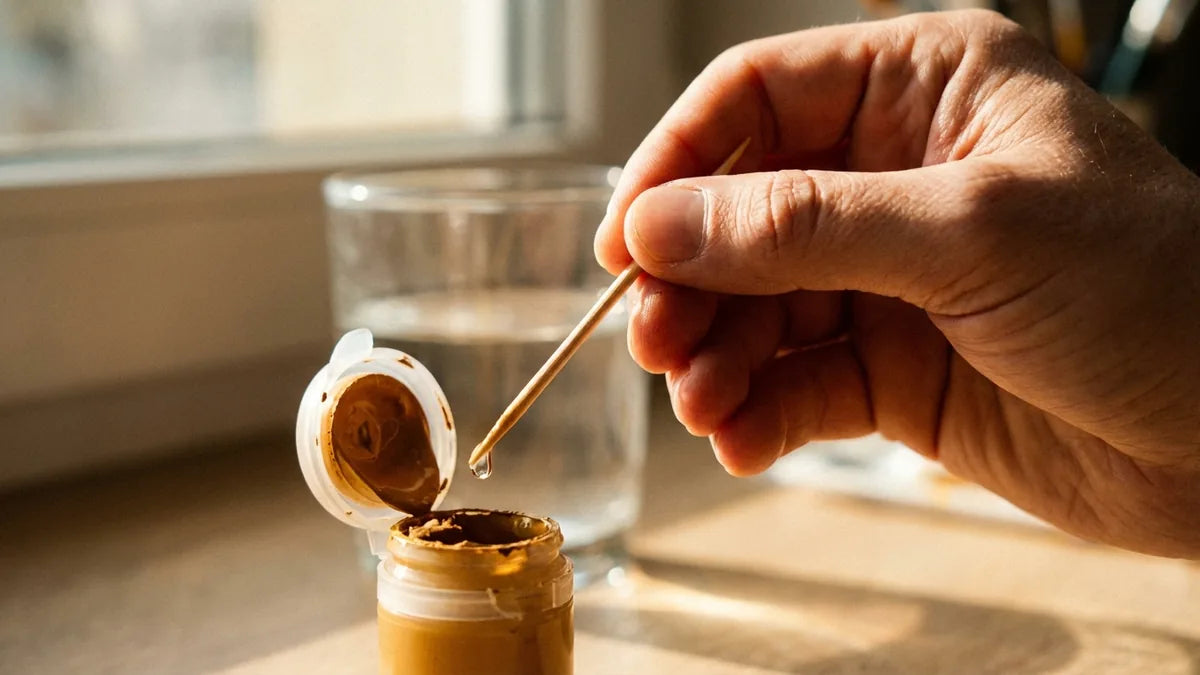
Start with one small drop of clean water. Mix it through the paint, test one brushstroke, and add another drop only if the paint is still too thick. The goal is a smooth paint that leaves the brush evenly but still covers the printed area.
Thin paint only when it is still soft but too thick to spread. If the paint is hard, rubbery, missing or completely dry, use our dried or missing paint guide instead. If the consistency is fine but a light or bright colour does not hide the number, follow the separate guide to improving light-paint coverage rather than adding more water.
If the paint no longer softens or a colour has run out, you can order replacement paint by colour code or a complete paint set.
How to Thin Acrylic Paint Step by Step
- Check the paint first. It should still move when pressed with a clean toothpick. Do not try to thin paint that has become a hard lump.
- Stir before adding anything. Paint can be thicker at the bottom or around the edges of the pot.
- Add one small drop of water. A damp toothpick gives you more control than pouring from a cup.
- Mix to the bottom and around the sides. Continue until the texture looks even and there are no thick pockets.
- Test on the canvas edge or a spare surface. The paint should flow from the brush without running into neighbouring sections.
- Repeat only if needed. Add another drop, mix and test again. Small steps are much easier to correct than an over-thinned pot.
What Should the Right Consistency Look Like?
There is no useful universal water percentage for every acrylic paint. Pot size, paint formulation, age, temperature and how much paint remains all affect the result. Judge the paint by how it behaves:
- Too thick: it drags, leaves ridges, clumps on the brush or will not spread into a small section.
- Ready to use: it forms a smooth brushstroke, stays inside the section and leaves an even film.
- Too thin: it runs, pools, separates or becomes noticeably more transparent.
If you add too much water, do not keep pouring more paint into the whole pot to compensate. Set the mixture aside and work from an unaffected colour where possible. For a nearly empty pot, mix a small test portion on a palette instead of changing everything at once.
Water or Acrylic Medium?
For the small pots in our paint by numbers kits, a tiny amount of clean water is normally the simplest first step. An acrylic medium or flow improver can be useful when you want to change flow without relying only on water, but products differ. Follow the manufacturer’s dilution and handling instructions rather than assuming that every medium can be added drop for drop.
Never add an unknown household liquid to the paint. It can change drying, adhesion or the surface finish in ways that are difficult to predict.
Do Not Thin Paint to Fix Poor Coverage
Water makes paint flow more easily, but it does not make a pale colour more opaque. Light and very bright colours can cover less strongly than darker colours. If the paint already spreads well, let the first layer dry and add another thin, even coat. Adding more water at this point can make coverage worse.
For stubborn printed numbers, read the full guide to light paint and printed-number coverage.
What If the Paint Is Almost Dry?
If the paint is still soft, one small drop of water and thorough mixing may restore a workable texture. Stop if the paint remains grainy, rubbery or hard. A rough mixture can leave visible particles and will not behave like the original paint.
When a colour is missing or beyond recovery, the Paint Mix Calculator can suggest a close emergency mix from the colours you still have. Test the mixed shade and let it dry before using it on a visible area.

How to Keep Paint Pots Usable
- Open one colour at a time and close the lid fully whenever you pause.
- Keep dried paint away from the rim so the lid can seal properly.
- Use a clean toothpick for mixing instead of returning a dirty brush to the pot.
- Keep the pots away from direct sunlight, heaters and strong airflow while you work.
- Rinse brushes before acrylic dries in the bristles.
Quick Troubleshooting Table
| Problem | Best next step |
|---|---|
| Soft paint that drags | Mix, add one small drop of water and test |
| Paint runs or pools | Stop adding water and use a smaller test portion |
| Light colour does not cover | Let it dry and add another thin coat |
| Paint is hard or rubbery | Use the dried or missing paint guide |
| A colour has run out | Use the Paint Mix Calculator for a small emergency mix |
Frequently Asked Questions
Can paint by numbers acrylic paint be thinned with water?
Yes. Our kits use water-based acrylic paint. Add clean water one small drop at a time, mix thoroughly and test before adding more.
How much water should I add?
Start with one small drop rather than a fixed percentage. The correct amount depends on how much paint remains and how thick it is. Stop as soon as the paint spreads evenly while still covering the canvas.
Can I thin completely dried acrylic paint?
Not reliably. If the paint is hard, rubbery or crumbles, replace or mix the colour instead of forcing the particles onto the canvas.
Will water make light paint cover better?
No. If the paint already spreads well, more water can reduce coverage. Let the first coat dry and add another thin coat.
Should I use flow improver in a paint by numbers pot?
You can use a product intended for acrylic paint, but follow its own dilution instructions. Do not assume that all mediums or flow improvers are used in the same concentration.
Ready to practise with a new design? Browse our paint by numbers kits.
Start your own project
A paint by numbers kit comes with the canvas, the acrylic paints and the brushes in one package.