
Creative Hobbies for Seniors - Motor Skills & Mental Health
Retirement opens opportunities for pursuing interests that busy working years may have pushed aside. For many seniors, creative hobbies represent ideal activities that provide mental stimulation, social connection, and physical engagement whilst accommodating the natural changes that come with ageing.
The relationship between creative activities and healthy ageing extends beyond simple entertainment. Research consistently demonstrates that engaging in regular creative pursuits can slow cognitive decline, maintain fine motor skills, and provide psychological benefits that significantly impact quality of life during later years.
Unlike physical exercise that may become challenging due to mobility limitations, creative hobbies adapt easily to individual capabilities whilst providing measurable health benefits that support independent living and emotional wellbeing.
The Science of Creative Activity and Ageing
Understanding how creative activities benefit ageing brains and bodies helps explain why these hobbies prove so valuable for senior health and provides motivation for consistent engagement.
Neuroplasticity and Cognitive Preservation
The adult brain retains remarkable capacity for forming new neural connections throughout life, a property called neuroplasticity. Creative activities stimulate multiple brain regions simultaneously, promoting the formation of new neural pathways that can compensate for age-related cognitive changes.
Multi-Modal Brain Stimulation: Creative hobbies engage visual processing, fine motor control, planning, and emotional centres simultaneously. This comprehensive brain activation strengthens cognitive reserve - the brain's ability to maintain function despite physiological changes.
Memory Enhancement: Activities requiring pattern recognition, colour coordination, and sequential processing - common elements in many creative hobbies - specifically strengthen memory systems that typically decline with age.
Executive Function Support: Planning creative projects, organising materials, and following complex instructions exercise executive function skills essential for independent living and decision-making.
Fine Motor Skills and Physical Health
Age-related changes in hand strength, dexterity, and coordination can impact daily living activities. Creative hobbies provide enjoyable ways to maintain and improve fine motor skills whilst avoiding the repetitive nature of traditional exercises.
Hand-Eye Coordination: Activities requiring precise placement of small objects or careful brush control maintain the coordination essential for tasks like cooking, writing, and personal care.
Finger Strength and Flexibility: Manipulating art materials, handling small objects, and using various tools maintain finger strength and joint flexibility that support independence in daily activities.
Bilateral Coordination: Many creative activities require both hands to work together - holding materials whilst manipulating tools - supporting bilateral brain communication that benefits overall motor function.

Mental Health and Social Benefits
Creative hobbies address multiple psychological challenges common in later life, from social isolation to loss of purpose following retirement.
Purpose and Achievement: Completing creative projects provides sense of accomplishment and purpose that retirement can sometimes diminish. Finished pieces serve as tangible evidence of productive time use and personal capability.
Social Connection: Many creative hobbies naturally facilitate social interaction, whether through crafting groups, sharing finished works, or teaching skills to family members.
Stress Reduction: The focused attention required for creative activities provides natural stress relief whilst creating meditative states that reduce anxiety and promote emotional equilibrium.
Ideal Creative Hobbies for Senior Beginners
Selecting appropriate creative activities for seniors requires considering physical capabilities, learning curves, and personal interests whilst ensuring activities provide meaningful challenge without causing frustration.
Paint by Numbers: Structured Creativity
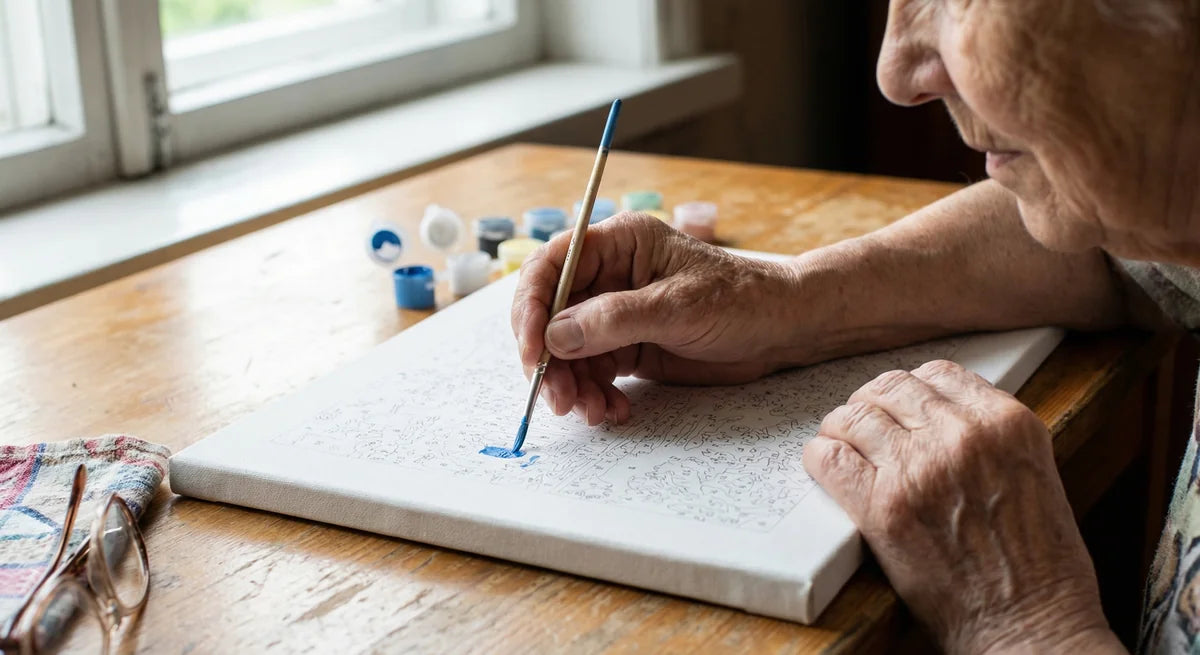
Paint by numbers offers an ideal introduction to painting for seniors who may feel intimidated by blank canvases or worry about artistic ability. The structured approach provides guidance whilst still allowing creative expression and colour appreciation.
Low Learning Curve: Clear instructions and numbered guidance eliminate the uncertainty that might discourage seniors from attempting traditional painting. Success feels achievable from the first session.
Adjustable Difficulty: Easy paint by numbers projects feature larger spaces and simpler designs perfect for beginners, whilst more complex options provide progression opportunities as skills develop.
Fine Motor Benefits: Brush control, colour mixing, and precise application develop hand steadiness and finger dexterity essential for daily living tasks.
Cognitive Engagement: Following number sequences, maintaining colour consistency, and planning work sections exercise memory, attention, and executive function skills.
Social Opportunities: Paint by numbers projects often become conversation starters and gift opportunities, naturally facilitating social connections with family and friends.
The variety available within paint by numbers ensures sustained interest, from peaceful landscapes that promote relaxation to more detailed scenes that provide ongoing challenge. Mini paint by numbers offer perfect options for seniors with limited workspace or those preferring shorter project commitments.
Diamond Painting: Precision and Meditation
Diamond painting combines the precision benefits of detailed handwork with the meditative qualities of repetitive activity. The technique involves placing small resin "diamonds" onto adhesive canvases following colour-coded charts.
Meditative Qualities: The repetitive nature of placing individual diamonds creates meditative states that reduce stress and promote relaxation whilst providing productive activity.
Visual Appeal: Completed diamond paintings create sparkling, jewel-like effects that provide significant visual satisfaction and pride in achievement.
Gradual Progression: Easy diamond painting projects introduce the technique gently, allowing skill development without overwhelming complexity.
Enhanced Accessibility: Diamond painting accessories include magnification tools and LED light pads that accommodate visual changes whilst ensuring comfortable working conditions.
Storage and Organisation: Diamond painting develops organisational skills as practitioners learn to manage multiple colours and maintain project organisation over time.
The precision required for diamond painting provides excellent fine motor exercise whilst the visual results create decoration suitable for personal display or meaningful gift-giving.
Wooden Puzzles: Cognitive Challenge and Satisfaction
Wooden puzzles offer cognitive stimulation through problem-solving whilst providing tactile satisfaction often missing from digital entertainment. Unlike traditional cardboard puzzles, wooden versions provide durability and enhanced tactile experience.
Spatial Reasoning: Puzzle assembly exercises spatial processing skills that support navigation, driving safety, and daily problem-solving abilities.
Patience Development: Working through challenging puzzles develops patience and persistence whilst providing manageable goals that prevent overwhelming feelings.
Tactile Stimulation: Wooden pieces provide satisfying tactile feedback that enhances the puzzle experience whilst stimulating touch receptors important for hand sensitivity.
Flexible Commitment: Puzzles accommodate varying energy levels and time availability, allowing sessions from 15 minutes to several hours based on personal preference and capability.
Family Engagement: Puzzle assembly often becomes collaborative family activity, providing opportunities for intergenerational bonding and shared achievement.
Adapting Creative Hobbies for Physical Limitations
As physical capabilities change, creative hobbies can be modified to maintain accessibility whilst preserving their therapeutic and enjoyable qualities. Understanding adaptation strategies ensures continued participation despite evolving needs.
Vision Considerations
Age-related vision changes need not prevent creative engagement when appropriate adaptations are implemented.
Enhanced Lighting: LED desk lamps with adjustable positioning eliminate shadows and provide bright, consistent illumination that reduces eye strain and improves detail visibility.
Magnification Tools: Magnifying glasses designed for craft work allow detailed activity participation whilst reducing eye fatigue. Some versions include built-in lighting for optimal visibility.
Large-Format Options: Many creative hobbies offer large-print or large-element versions specifically designed for vision accessibility. These maintain full creative challenge whilst accommodating visual needs.
High-Contrast Materials: Selecting projects with strong colour contrasts ensures visibility even with reduced colour discrimination or general vision clarity.
Hand and Wrist Adaptations
Arthritis, reduced grip strength, or coordination changes require thoughtful tool selection and technique modifications.
Ergonomic Tools: Specially designed brushes, pencils, and craft tools with enlarged grips reduce hand strain whilst maintaining precise control needed for detailed work.
Frequent Breaks: Planning regular rest periods prevents overexertion whilst maintaining session enjoyment. Many seniors find 30-45 minute sessions optimal for balancing engagement with comfort.
Surface Positioning: Adjustable easels, lap desks, and work surface modifications ensure comfortable positioning that reduces neck and back strain during extended creative sessions.
Adaptive Techniques: Modifying techniques to reduce repetitive motions or grip requirements allows continued participation. For example, using broader brush strokes or working in larger sections reduces detailed manipulation demands.

Cognitive Accommodations
Memory changes or attention difficulties can be accommodated through environmental modifications and technique adjustments.
Simplified Instructions: Breaking complex projects into smaller steps with written reminders supports memory whilst maintaining project integrity.
Organisation Systems: Clear labelling and systematic organisation of materials reduces confusion and supports independent project management.
Progress Documentation: Photographing work progress provides memory aids and motivation whilst creating records of achievement and skill development.
Building Sustainable Creative Practices
Developing long-term creative habits requires strategies that maintain motivation whilst adapting to changing capabilities and interests over time.
Establishing Routine and Environment
Dedicated Space: Creating designated creative areas, even if small, signals commitment to creative practice whilst providing storage for materials and works in progress.
Consistent Schedule: Regular creative sessions, even brief ones, prove more beneficial than sporadic long sessions. Many seniors find morning hours provide optimal energy and focus for detailed work.
Comfortable Setup: Investing in proper lighting, seating, and tool organisation creates inviting environments that encourage regular engagement rather than presenting barriers to participation.
Material Management: Maintaining organised, accessible supplies reduces setup barriers that might discourage regular practice, particularly important for seniors with energy limitations.
Progressive Skill Development
Gradual Complexity Increase: Starting with simpler projects and gradually increasing difficulty maintains confidence whilst providing ongoing challenge that prevents boredom.
Skill Transfer: Learning fundamental techniques in one medium often transfers to others, allowing exploration of various creative activities with reduced learning curves.
Documentation and Reflection: Maintaining records of completed projects, techniques learned, and personal preferences guides future project selection whilst providing satisfaction in reviewing creative development.
Social Integration and Sharing
Community Groups: Many communities offer senior-focused creative groups that provide social interaction alongside skill development. Libraries, community centres, and senior centres frequently host such programmes.
Family Involvement: Teaching creative skills to grandchildren or sharing completed works with family creates intergenerational bonding opportunities whilst providing purpose for creative efforts.
Gift Creation: Using creative skills to create personalised gifts provides motivation and purpose whilst demonstrating consideration and love for recipients.
Online Communities: Digital communities focused on specific creative hobbies offer support, inspiration, and connection for seniors comfortable with technology.
Health Benefits and Research Evidence
Scientific research increasingly recognises creative activities' significant impact on senior health outcomes, providing evidence for their inclusion in healthy ageing strategies.
Cognitive Health Research
Cognitive Health Support: Studies suggest that regular engagement in creative activities may support cognitive health and reduce the risk of mild cognitive impairment, though individual results vary significantly.
Processing Speed Maintenance: Creative activities requiring rapid decision-making and visual processing help maintain cognitive processing speed that typically declines with age.
Memory System Support: Activities involving pattern recognition, colour coordination, and sequential processing specifically strengthen memory systems most vulnerable to age-related decline.
Physical Health Outcomes
Fine Motor Skill Preservation: Regular engagement in detailed handwork maintains finger dexterity and hand-eye coordination essential for independent living activities like dressing, cooking, and personal hygiene.
Arthritis Management: Gentle, repetitive motions involved in many creative activities can reduce arthritis stiffness whilst building strength in affected joints.
Balance and Coordination: Activities requiring bilateral hand use support brain integration that benefits overall coordination and balance, reducing fall risk.
Mental Health and Quality of Life
Depression Prevention: Creative engagement provides sense of purpose and achievement that significantly reduces depression risk among seniors, particularly those experiencing social isolation.
Anxiety Reduction: The focused attention required for creative activities naturally reduces anxiety whilst providing constructive worry outlets through productive engagement.
Self-Efficacy Enhancement: Successfully completing creative projects builds confidence in personal capabilities, supporting psychological resilience and independence motivation.

Overcoming Common Barriers
Understanding and addressing typical obstacles to creative engagement ensures more seniors can access these beneficial activities.
"I'm Not Artistic" Mindset
Many seniors avoid creative activities due to beliefs about artistic ability formed during school experiences decades earlier. Modern understanding emphasises creativity's therapeutic benefits over artistic achievement.
Redefining Success: Focusing on personal enjoyment, stress relief, and skill development rather than artistic quality removes performance pressure that inhibits participation.
Process vs. Product: Emphasising the experience of creating rather than final results reduces anxiety about artistic ability whilst maintaining engagement benefits.
Guided Options: Structured activities like paint by numbers provide creative engagement without requiring independent artistic decision-making that might feel overwhelming.
Physical Limitation Concerns
Worries about physical capability can prevent seniors from attempting beneficial activities that could be easily adapted to individual needs.
Adaptive Equipment: Demonstrating available adaptive tools and techniques shows how physical limitations need not prevent creative engagement.
Professional Guidance: Occupational therapists specialising in senior care can recommend specific adaptations and techniques for individual physical situations.
Peer Models: Connecting with other seniors who have successfully adapted creative practices provides inspiration and practical guidance.
Cost Considerations
Fixed incomes may make seniors hesitant about investing in creative supplies, though many options exist for budget-conscious participation.
Community Resources: Libraries, senior centres, and community organisations often provide creative supplies and instruction at minimal cost.
Shared Purchases: Group buying of supplies or sharing tools among friends reduces individual costs whilst building social connections.
Progressive Investment: Starting with basic, inexpensive supplies allows testing interest before significant financial commitment.
Technology Integration for Modern Seniors
While traditional creative activities provide excellent benefits, thoughtful technology integration can enhance accessibility and expand creative possibilities for seniors comfortable with digital tools.
Digital Enhancement Tools
Online Instruction: Video tutorials and online classes provide instruction flexibility that accommodates individual learning pace and schedule preferences.
Project Planning Apps: Digital tools for colour palette selection, project organisation, and progress tracking can enhance traditional creative activities.
Social Platforms: Online communities focused on specific creative hobbies provide support and inspiration for seniors who may have limited local creative communities.
Hybrid Approaches
Digital Pattern Creation: Using technology to create or customise patterns for traditional handwork combines modern tools with traditional techniques.
Progress Documentation: Digital photography and organisation tools help seniors track creative development whilst sharing achievements with distant family members.
Supply Ordering: Online shopping capabilities ensure access to diverse supplies regardless of local availability or transportation limitations.
Building Creative Legacy and Family Connections
Creative hobbies provide unique opportunities for seniors to build lasting legacies whilst strengthening family relationships through shared interests and skill transfer.
Intergenerational Skill Sharing
Teaching Opportunities: Passing creative skills to younger family members creates valuable bonding experiences whilst preserving traditional techniques and family practices.
Collaborative Projects: Working on creative projects with children or grandchildren builds relationships whilst creating shared memories and tangible mementoes.
Skill Documentation: Recording creative techniques and family stories related to handwork preserves cultural knowledge for future generations.
Legacy Creation
Meaningful Gifts: Handmade items carry emotional significance beyond commercial gifts, representing time, thought, and personal skill investment.
Memory Preservation: Creating artwork based on family photographs or significant locations preserves memories in tangible forms that can be shared and treasured.
Technique Preservation: Learning and practising traditional crafts helps preserve cultural techniques that might otherwise disappear.
Frequently Asked Questions
What creative hobbies are best for seniors with arthritis?
Activities with gentle, flowing motions work best for arthritis management. Paint by numbers with larger brush work, wooden puzzles with chunky pieces, and diamond painting with ergonomic tools provide therapeutic benefits whilst accommodating joint sensitivity. Start with shorter sessions and use adaptive tools designed for arthritis management.
How can seniors afford creative hobby supplies on fixed incomes?
Many communities offer senior discounts at craft stores, whilst libraries and community centres often provide free or low-cost creative programmes. Start with basic, inexpensive supplies and gradually invest in better tools as interests develop. Many creative groups share supplies and offer bulk purchasing opportunities.
Are there creative hobbies suitable for seniors with dementia?
Yes, many creative activities adapt well for dementia care. Simple, repetitive activities like colour sorting for diamond painting, large-piece wooden puzzles, and basic paint by numbers provide stimulation whilst accommodating cognitive changes. Focus on familiar subjects and maintain consistent routines for best results.
How often should seniors engage in creative activities for health benefits?
Research suggests 30-45 minutes of creative activity 3-4 times per week provides optimal cognitive and motor skill benefits. However, even 15-20 minute daily sessions offer significant advantages. Consistency matters more than duration - regular short sessions prove more beneficial than occasional long ones.
Can creative hobbies really help prevent cognitive decline?
Scientific studies suggest that regular creative engagement may support cognitive health as part of an active lifestyle. While creative hobbies cannot guarantee cognitive preservation, they provide benefits for brain health alongside other lifestyle factors like physical exercise, social engagement, and healthy nutrition.
