
Diamond Painting Instructions for Beginners — Complete Guide
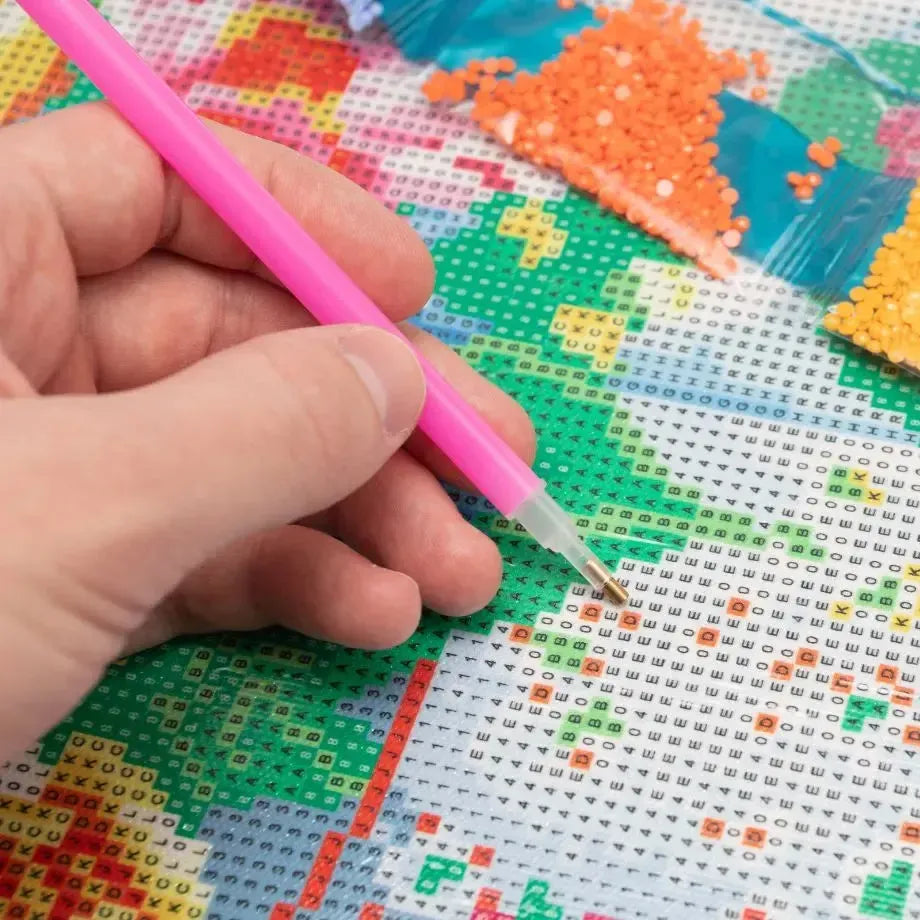
To start diamond painting, match a canvas symbol to its drill packet, pick up a drill with the pen and place it on the matching symbol. Work on one small exposed section and keep the rest covered. The steps below take you from checking the kit to finishing your first project.
How does Diamond Painting work?
Diamond painting means placing small, flat-backed pieces called drills onto a printed adhesive canvas. Match each symbol on the canvas to the corresponding drill packet using the kit's chart. The picture takes shape as you fill the marked spaces. You do not need to paint or draw the design yourself.
What comes with Diamond Painting?
Check the contents listed for your chosen diamond painting kit before buying extra tools. A typical kit includes:
- A printed adhesive canvas with a protective cover.
- A chart matching canvas symbols to drill colours.
- Packets of drills for the design.
- A placement pen, tray and wax or another specified pickup material.
Contents vary, so compare the package with its own list when it arrives. Start with the supplied tools before deciding whether additional accessories would help.

How to get started?
Choose a clean, stable table with enough room for the canvas and a tray. Position your light so that you can read the symbols without glare. Check that the design, drill packets and tools match the package list before opening the packets.
Keep each colour labelled with its packet code. If you transfer drills into containers, move the label too; do not rely on colour alone to identify similar shades.
How to interpret symbols?
Find a symbol on the canvas, then locate that same symbol on the chart. Read the packet code beside it and select the matching drill packet. The symbol itself may be a letter, number or shape; it is not necessarily the colour code. Check your own kit's chart rather than a chart from another project.

Removing the protective film
Peel back only enough of the original cover to work on a small section, leaving the rest protected from dust and fibres. Fold the cover back rather than cutting it while it lies on the canvas. When you pause, replace it with the same side facing the adhesive, following the kit's instructions.
If you need separate cover sheets, read the guide to diamond painting release paper. Do not assume that ordinary paper or any baking paper is a suitable replacement.
Placing the Diamonds
- Pour a small amount of one labelled colour into the tray. Gently shake it so that some drills sit flat-side down.
- Prepare the pen with the pickup material supplied for it. For a wax-filled tip, remove any protective film from the wax and load a small amount into the tip cavity.
- Pick up a drill by its raised face and place its flat back onto the matching canvas symbol.
- Press it into contact without forcing the pen. With square drills, check that the edges follow the printed grid.
- Finish the chosen colour within your exposed section, then return spare drills to their labelled packet before changing colours.
If drills stop lifting or will not release from the pen, check the tip for excess wax or debris and test a small adjustment. The diamond painting wax guide covers the pickup process in more detail.
Round vs square drills — which should you choose?
Both shapes can be used for a first project. The practical difference is how you align them:
- Round drills: centre each drill on its symbol. You do not need to rotate it to line up straight edges. Small spaces remain between the circles.
- Square drills: align the straight edges with the grid to form close-fitting rows. Check the alignment as you go rather than waiting until a large area is filled.
Choose the shape and finished appearance you prefer. Square drills are not reserved for advanced crafters, and round drills are not only for beginners. Canvas size, colour changes and the clarity of the printed symbols also affect your experience.
Shape is different from coverage. Full drill means the whole picture area is worked in drills; partial drill means only selected parts are worked, leaving some printed areas uncovered. Either term describes the coverage, not whether the drills are round or square. Our range does not include partial-drill kits.
What are the differences between diamond paintings from different manufacturers?
Compare the actual contents and instructions rather than assuming every kit uses the same materials. Packet labels, storage bags, protective covers and tools can differ. Before starting, check that you can read the chart and distinguish similar symbols.
What is the difference between a paper or plastic protective film?
Both paper-backed and clear covers protect the adhesive until you work on that section. The appearance of the cover alone is not enough to identify the adhesive system or judge the quality of a kit. Follow the instructions for that canvas, especially when removing or replacing its cover.

What size diamond painting should you get?
For a first project, choose a picture you like and a canvas that fits your available table and storage space. A smaller picture area means fewer drills when comparing the same drill size, but frequent colour changes and hard-to-read symbols can still make a small project fiddly.
For a custom photo, look at the subject, crop and intended canvas size together. Small faces and background details may not remain distinct when converted into a grid. Use the diamond painting size and drill-count calculator to explore the scale, treating its estimates as guidance rather than a guarantee of image quality or completion time.
Common mistakes to avoid
Opening too much protective film at once
Keep the unworked area covered. Replacing the cover helps prevent further contamination; it does not repair damaged adhesive. If drills will not adhere, pause and contact the seller before trying a repair product.
Overloading the pen tip with wax
Start with a small amount inside the tip cavity. If wax bulges out or drills will not release, remove the excess and test again.
Mixing colours or losing labels
Work from the chart and keep packets labelled. Similar-looking drills may belong to different symbols, so do not combine them just because their colours look alike.
Ignoring your workspace
Adjust the light and canvas position so that you can see and reach the active section comfortably. Take breaks when you need them. A light pad for viewing canvas symbols is an optional aid, not a requirement for starting.
For items you actually need, browse the diamond painting accessories collection.
What to do with a finished Diamond Painting?
Check for missed symbols and raised or misaligned drills before deciding how to display or store the work. Framing does not automatically require a sealer. If you are considering one, check that it is intended for your canvas and drills and follow its label.
Our diamond painting sealing guide explains what to check first. The 120 ml diamond painting sealer is a finishing option, not a substitute for resolving a problem with the original adhesive.
You can then frame the piece, give it as a gift or store it flat in a suitable protective folder.
Frequently Asked Questions
Is diamond painting difficult for beginners?
The basic sequence is to match a symbol, pick up its drill and place it on the canvas. Try one small section first. The amount of detail, visibility of the symbols and time you want to spend matter more than a beginner label.
What extra tools are useful for beginners?
Check the kit's contents before buying extras. Start with its supplied tools, then consider labelled storage if open packets are awkward or a light pad if you struggle to see the symbols.
What size is best for a first diamond painting?
There is no single best size. Choose a picture you want to complete, check the printed detail and make sure you have space to work and store it. A smaller picture usually involves fewer drills when the drill size is the same.
In Conclusion
Start with the kit's chart, labelled colours and one small exposed section. Practise placing a few drills before trying to work quickly, and keep the rest of the canvas covered between sessions.
Related guide: If you are unsure which tools are essential and which can wait, read our diamond painting tools and accessories for beginners guide.
