Best Brushes for Paint by Numbers: A Practical Guide to Brush Types, Sizes and Sets
If you want the short answer, the best brushes for paint by numbers are a small set of nylon detail, round and flat brushes that cover tiny numbered areas, clean edges and larger background sections without forcing one brush to do every job.
Paint by numbers kits usually include a small basic selection, often three or four brushes. They work. You can finish a painting with them and the result will look fine from across the room.
But if you've ever fought a fraying bristle tip while trying to fill a region the size of a lentil, or watched paint bleed into a neighbouring section because your brush held too much liquid and too little shape, you already know: the brushes are the weak link in most kits.
The good news is that upgrading doesn't require spending a fortune or earning an art degree. You just need to understand which brush types, sizes and materials actually matter for paint by numbers — and which details are mostly marketing noise.
Quick Answer: Which Brush Should You Use for Which Area?
If you only want a practical brush-selection guide, use this:
| Paint by numbers task | Best brush type | Best size range | Why it works |
|---|---|---|---|
| Tiny numbered areas, eyes, petals, sharp corners | Detail round | 5/0–3/0 | Keeps the tip controlled where a wider brush would flood the section |
| Clean edges between adjacent colours | Liner or small round | 3/0–0 | Holds a neat edge without dragging too much paint |
| Small to medium sections | Round | 0–1 | Gives better coverage while still feeling precise |
| Medium blocks with visible borders | Round or flat | 1–3 | Faster than a detail brush, but still easy to steer |
| Large backgrounds, skies, water, solid clothing | Flat | 3+ | Lays paint more evenly and reduces visible streaking |
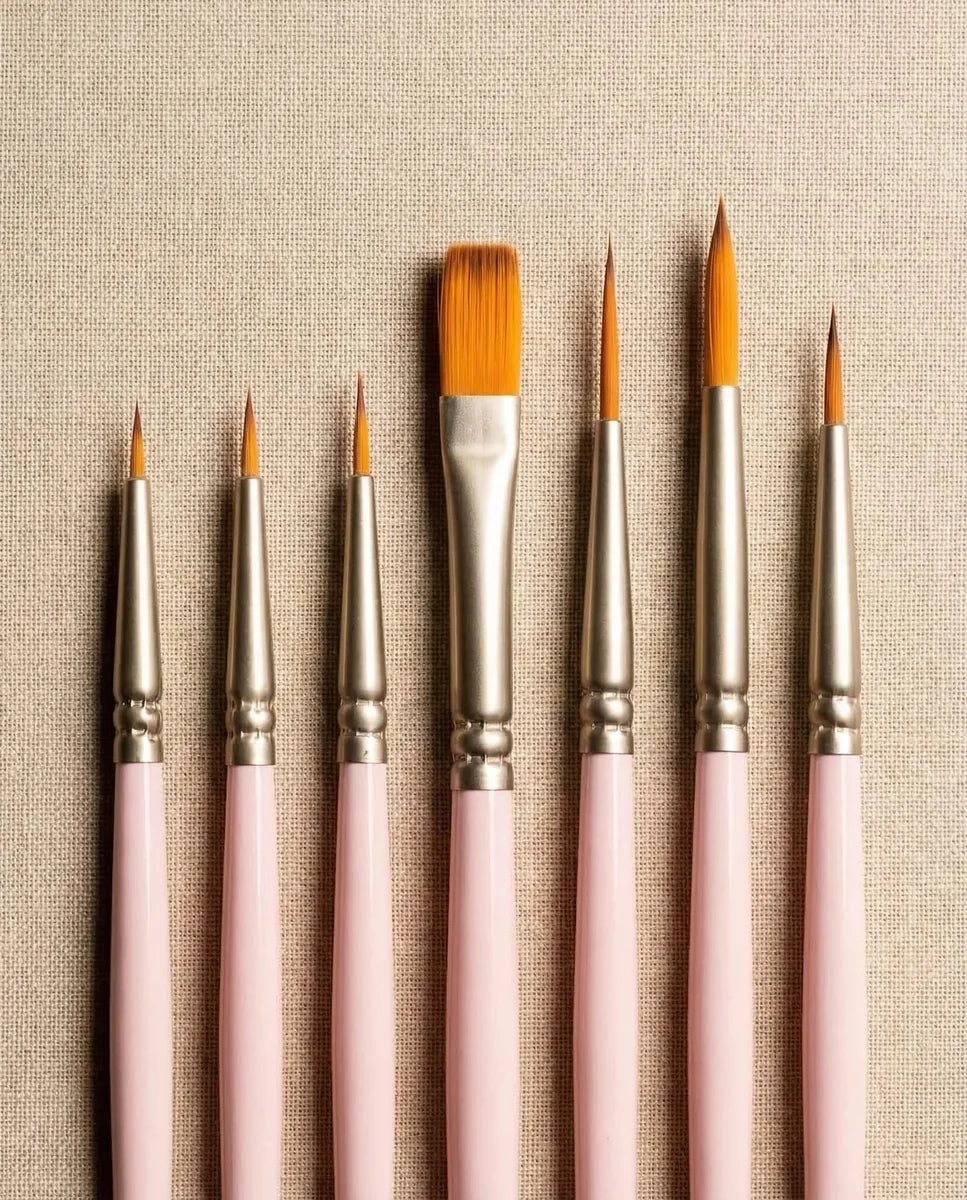
Want the useful brush sizes in one set? Explore the 7-piece Paint by Numbers × SINOART brush set.
That table is the core of the decision. Most hobbyists do not need a huge artist set. They need a handful of brushes that make sense for the way numbered canvases are actually painted.

Why Kit Brushes Are Usually Just "Good Enough"
Paint by numbers kit manufacturers optimise for the total package price. The canvas printing, paint pots, colour matching and packaging all eat into the budget. Brushes are where corners get cut — not because manufacturers are lazy, but because a serviceable brush costs a fraction of a good one, and most buyers won't notice the difference until they're mid-project.
Common issues with bundled brushes:
- Bristles that splay after two washes. Cheap nylon loses its point quickly, which makes detail work progressively harder as you move through a painting.
- Too few sizes. Three brushes covering the full range from pinpoint detail to broad coverage is a big ask. You end up using the medium brush for everything, which means compromising on both precision and speed.
- Short, slippery handles. Shorter handles reduce shipping box dimensions (and cost), but they also reduce control — especially during longer sessions when your grip tightens.
None of this means kit brushes are useless. For a first project, they're perfectly adequate. But once you've completed two or three paintings and want cleaner results, brushes are the single most cost-effective upgrade you can make.
What to Look for in Paint by Numbers Brushes
Bristle Material: Nylon vs. Natural vs. Synthetic Blend
For paint by numbers kits that use acrylic paint — which is virtually all of them — nylon bristles are the practical choice. Here's why:
- Acrylic paint is water-based and dries fast. Nylon doesn't absorb water the way natural hair does, so the paint stays on the bristle surface where you can control it.
- Nylon cleans easily. A rinse in water between colours is usually enough. Natural hair fibres trap pigment deeper and need more careful cleaning.
- Nylon holds its shape. A decent nylon brush springs back to its original form after each stroke. Natural hair can be softer and more expressive, but that expressiveness works against you when you're trying to stay inside a 4mm numbered section.
Natural hair brushes can work well in many painting techniques. For the water-based acrylic paint used in paint by numbers, a firm nylon tip is usually easier to control in small numbered areas.
Synthetic blends sit in the middle. Some are excellent. But for the price range most hobbyists are shopping in, a well-made nylon brush outperforms a mediocre blend.

Brush Sizes: What You Actually Need
The size numbering system for brushes is, frankly, a mess. A "size 0" from one manufacturer might match a "size 1" from another. Ignore the numbers and focus on what each brush does:
- Ultra-fine detail (sizes 5/0 to 0): For the tiny numbered sections that appear in complex designs — eyes on portraits, flower stamens, thin outlines. This is where cheap brushes fail hardest, because a single stray bristle ruins precision at this scale.
- Fine liner (sizes 0 to 1): Slightly longer bristles for edging work and thin lines. Useful for painting clean borders between adjacent colours without taping.
- Medium round/flat (sizes 2 to 4): Your workhorse for mid-sized sections. A good medium brush fills evenly without leaving visible brush marks in the acrylic.
- Broad flat (sizes 5+): For large background areas — skies, water, solid-colour clothing. Speed and even coverage matter more than precision here.
A versatile set covers at least four of these roles. Five to seven brushes is a sweet spot: enough variety to handle any kit design, without cluttering your workspace with brushes you'll never pick up.
Handle Material and Length
Wooden handles give better tactile feedback than plastic. They absorb slight moisture from your hand, which reduces slipping during long sessions. Plastic handles are lighter, which some painters prefer — but they tend to feel less stable for detail work.
Handle length matters less than you'd think. Paint by numbers is typically done at a desk or table with the canvas flat, not on an easel at arm's length. A medium-length handle (15–20 cm) offers enough leverage without feeling unwieldy.

Brush Shapes Explained: Round, Flat, Liner and When Each One Earns Its Place
Most paint by numbers painters default to round brushes for everything. Rounds are versatile — they can make both thin lines and broader strokes depending on pressure. But understanding the other shapes opens up shortcuts:
Round
The all-rounder. A pointed round brush handles detail work and medium coverage. If you could only own one shape, this is it. Most paint by numbers sets lean heavily on rounds, and that's sensible.
Flat
A flat brush lays paint down in smooth, even strokes — ideal for larger rectangular or square sections. Flats also create crisp edges when used on their side, which is useful for geometric designs or architectural subjects.
Liner / Script
A liner has long, thin bristles that hold more paint than a standard round. This means you can paint a continuous line without reloading as often. Useful for tree branches, fence posts, ship rigging and any design with long, thin elements.
Filbert
A rounded flat — good for blending and soft edges, but honestly less critical for paint by numbers than for freehand work. Nice to have, not essential.
How Many Brushes Do You Actually Need?
For a standard paint by numbers kit with 24–36 colours, five to seven brushes covers every scenario you'll encounter. Here's a practical loadout:
| Role | Quantity | Why |
|---|---|---|
| Ultra-fine detail | 2 | These wear fastest and you'll want a backup when the tip softens mid-painting |
| Fine liner / edging | 1 | For borders and thin lines |
| Medium round | 2 | One stays in use while the other dries between colour changes |
| Broader flat or round | 1–2 | Background and large single-colour areas |
Two ultra-fine brushes isn't redundant — it's practical. The smallest brush in any set works the hardest and wears the fastest. Having a spare means you're not fighting a dull tip halfway through a detailed section.
The SINOART 7-Piece Brush Set: A Closer Look
We developed the Paint by Numbers × SINOART Brush Set specifically to address the gaps we kept seeing in kit brushes. SINOART is an established art supplies manufacturer, and the collaboration focused on getting the size range and bristle quality right for paint by numbers — not for general art use.
The set includes seven brushes in sizes 5/0, 5/0, 3/0, 0, 3, 3 and 0. In practice, that gives you six different brush types plus a duplicate of the 5/0 detail brush — because that's the one you reach for most and the one that wears out first.
The bristles are nylon, paired with wooden handles. The nylon keeps its point well through repeated use with acrylics, and the wooden handles offer a steadier feel than the plastic-handled brushes bundled with most kits.

The set is built around how paint by numbers actually works: lots of tiny areas, frequent colour switches and hours of continuous use. If your current brushes came free with a kit, the difference is noticeable from the first session.
If you paint regularly, this is the point where a purpose-built brush set starts making more sense than trying to keep a tired free brush going for one more project.
Caring for Your Brushes (So They Last More Than One Project)
Brush life depends on use and care. Cleaning the bristles before acrylic paint dries helps them keep their shape for longer.
During painting: - Rinse between every colour change. Acrylic dries fast — if paint hardens near the ferrule (the metal part), the bristles will splay permanently. - Don't leave brushes sitting in water. This bends the bristles and loosens the glue holding them in place. - Use a separate water container for rinsing and a clean one for thinning paint. Dirty rinse water muddies your colours.
After painting: - Wash with lukewarm water and a drop of mild soap. Work the bristles gently with your fingers to remove paint near the base. - Reshape the tip while the bristles are still damp. - Store brushes flat or tip-up in a jar. Never store them tip-down — gravity and residual moisture will deform the bristles overnight.
Rescue mission for dried-on paint: If acrylic has dried in the bristles, start with lukewarm water and mild soap. If that is not enough, use a dedicated brush cleaner according to its instructions and work the softened paint out gently.
For a complete walkthrough of the painting process — including setup and finishing — our paint by numbers instructions guide covers everything from first brushstroke to final coat.
Brushes vs. Other Upgrades: Where Should You Spend First?
If you're looking to improve your paint by numbers results, brushes are the highest-impact, lowest-cost upgrade. But they're not the only one worth considering:
- A frame changes how the canvas feels under your brush. Painting on a taut, stretched surface is noticeably smoother than painting on a loose canvas laid flat. Browse paint by numbers supplies for frames in several sizes.
- Better lighting makes a surprising difference in colour accuracy. You don't need a professional rig — a desk lamp with a daylight-temperature bulb (5000–6500K) is enough to see the true colours of your paint.
- Transparent gesso can improve how paint sits on the canvas surface, especially on designs where the printed numbers feel slightly glossy or slick. If that sounds useful, see our transparent gesso for paint by numbers.
Brushes are usually the first practical upgrade: better control helps you get more from the acrylic paints already included with the kit.
If you're new to the hobby and choosing your first paint by numbers kit, the bundled brushes will get you started — but keep in mind that an upgrade set waiting in the drawer makes the second session far more enjoyable.
Brushes help with small areas, but the whole experience starts with the right kit. See choosing the right adult paint by numbers kit.
Frequently Asked Questions
Can I use watercolour brushes for paint by numbers?
You can, but they're not ideal. Watercolour brushes — especially natural hair ones — are designed to hold and release water gradually. With the thicker consistency of acrylic paint, they tend to feel floppy and imprecise. Nylon brushes designed for acrylics give better control.
How often should I replace my paint by numbers brushes?
Brush life depends on how often the brushes are used, cleaned and stored. Replace individual brushes when the tip no longer holds a clean point after washing, or when bristles start splaying despite proper care.
Is there a difference between "artist grade" and "craft grade" brushes?
Yes, but the distinction matters less for paint by numbers than for freehand painting. Artist-grade brushes offer superior spring, precision and longevity — but a well-made craft-grade nylon set handles the demands of paint by numbers perfectly well. You don't need kolinsky sable to fill numbered sections.
What brush size is best for paint by numbers?
There's no single best size. Complex designs with many small sections need ultra-fine detail brushes (5/0 to 0). Simpler designs with larger colour areas benefit from medium brushes (sizes 2–4). A set covering both ends — like a 5–7 piece range — means you're prepared for any kit.
Should I wet my brushes before painting with acrylics?
Lightly dampening the bristles before loading paint can help the brush glide more smoothly — but don't soak them. A brush that's too wet will thin the acrylic paint and cause it to run into adjacent sections. A quick dip and a gentle wipe on a cloth is enough.
